
By Emily Herr
The Scoop Digital Newspaper: June 2025

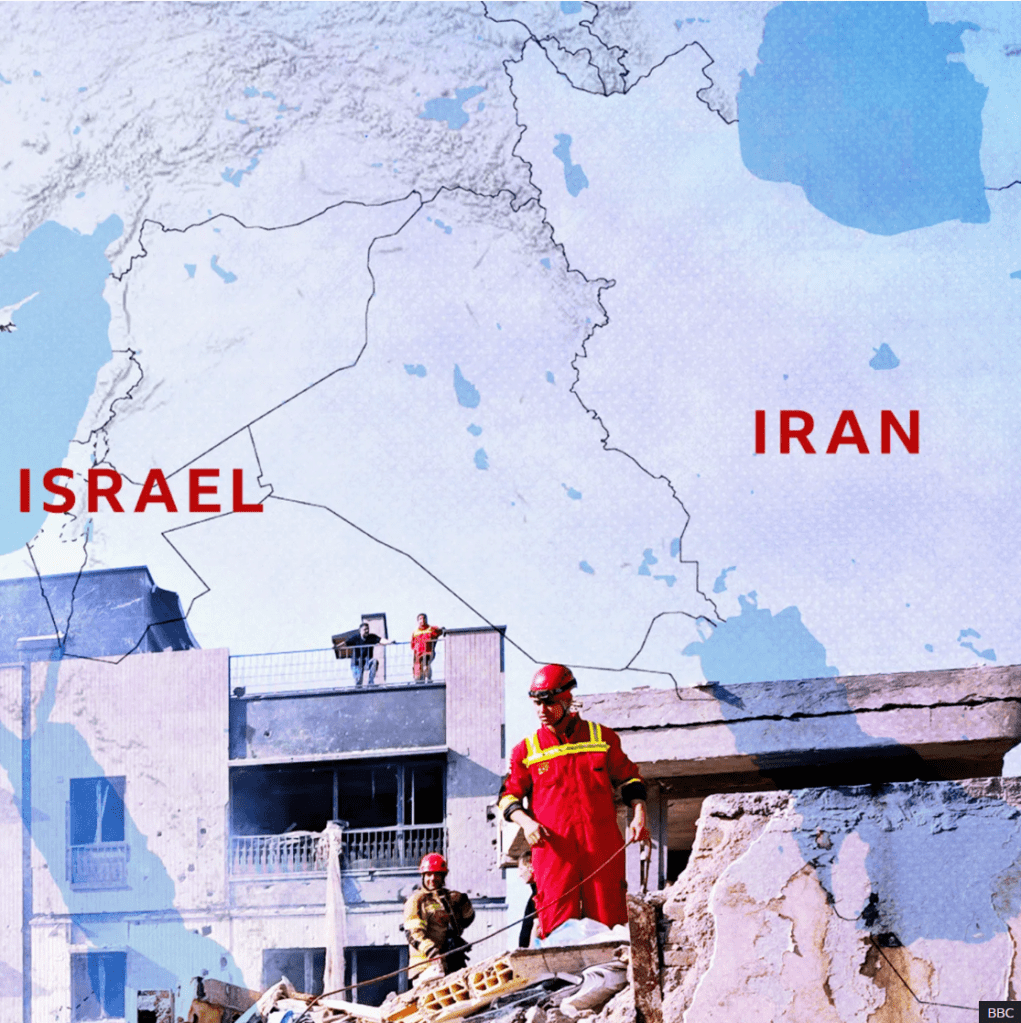
Washington D.C. – June 30, 2025 – Just days after President Donald Trump triumphantly declared a “Complete and Total CEASEFIRE” between Israel and Iran, marking an “Official END” to what he termed the “12 Day War,” the fragile agreement has largely unraveled. The brief cessation of hostilities, which the U.S. facilitated through direct military action against Iranian nuclear sites, has done little to resolve the profound animosity and strategic divergence that continue to define relations between Tehran and Jerusalem.
The ceasefire announcement on June 23 came at the culmination of an intense period of escalation. It followed a series of Israeli strikes targeting Iranian military leaders, scientists, missile launchers, anti-air defenses, and critical nuclear facilities. The conflict reached a new intensity with the United States’ direct involvement, as U.S. forces, notably using GBU-57 Massive Ordnance Penetrator bombs and B-2 Spirit bombers, carried out blistering strikes on key Iranian nuclear sites, including the deep underground uranium enrichment facility at Fordow. Iran retaliated with its own ballistic missile attacks, including a largely symbolic, yet significant, strike on the U.S. Al Udeid Air Base in Qatar, which reportedly caused no casualties due to prior warning.
President Trump hailed the ceasefire as a testament to his administration’s “peace through strength” approach, claiming it had “obliterated” Iran’s nuclear program. He announced a phased implementation, with Iran set to adhere by midnight ET on June 24, and Israel by noon ET on June 24. However, the optimism proved short-lived.
Immediate Cracks in the Truce:
The ink was barely dry on Trump’s declaration when the agreement began to show severe cracks, revealing a substantial gap between diplomatic pronouncements and on-the-ground realities:
- Iran’s Conditional Stance: While Iran’s Deputy Foreign Affairs Minister for Policy, Abbas Araghchi, acknowledged the “wheels were in motion” for a deal mediated by Qatar, he publicly stated, “As of now, there is NO ‘agreement’ on any ceasefire or cessation of military operations.” He further clarified that Iran would cease its attacks only “provided that the Israeli regime stops its illegal aggression against the Iranian people no later than 4 am Tehran time.” This conditional acceptance, coupled with Supreme Leader Ayatollah Ali Khamenei’s defiant pre-ceasefire declaration that Iran would “not surrender,” immediately cast doubt on the sincerity of a full, mutual de-escalation.
- Israel’s Pre-emptive and Post-Ceasefire Strikes: Israel, for its part, did not immediately confirm the ceasefire. Reports indicated that Israeli forces launched a major assault on Tehran hours ahead of the ceasefire’s supposed start, hitting “regime targets and killing hundreds of Basij and Iranian security forces.” Following the ceasefire’s designated start, Israel promptly accused Iran of violating the truce by launching missiles into its airspace. This accusation was met with rapid and “intense strikes” in response, with an Israeli official confirming two Iranian missiles were intercepted. Prime Minister Benjamin Netanyahu’s office, when it finally confirmed acceptance of the ceasefire hours later, asserted that Israel had already achieved its war goals.
- Trump’s Public Frustration: The fragility of the situation led to President Trump expressing “deep frustration” with both sides, publicly admonishing them for continuing hostilities despite his announced agreement. He lamented that the countries had “fought for so long and so hard that they don’t know what the f—- they’re doing,” a stark admission of the ceasefire’s immediate challenges.
Why the Ceasefire Faltered:
The rapid breakdown of the ceasefire can be attributed to several deep-seated issues that a mere cessation of fire could not address:
- Profound Distrust and Divergent Goals: A “massive deficit of trust” exists between Iran and Israel. Israel’s primary objective in the conflict was to degrade Iran’s nuclear program and missile capabilities, with some elements even hoping for regime change. Conversely, Iran’s paramount interest lies in regime survival, maintaining its nuclear program, and asserting its regional influence. These fundamentally opposing objectives make a stable, lasting peace exceedingly difficult without significant, reciprocal concessions.
- Ambiguous Terms and Unilateral Declaration: The ceasefire, as announced by Trump, was based solely on the end of military hostilities, rather than comprehensive conditions regarding Iran’s nuclear program or economic interests. Its unilateral declaration by the U.S. president, rather than a jointly negotiated and publicly affirmed agreement by both parties, left significant room for differing interpretations and immediate breaches.
- Domestic Political Imperatives and Claims of Victory: Both sides, and indeed President Trump, sought to claim victory from the conflict. Trump framed the ceasefire as vindication of his “obliteration” of Iran’s nuclear program. Iran, in turn, with President Masoud Pezeshkian lauding a “great victory,” emphasized its resilience and claimed the truce was imposed on “the enemy.” Netanyahu also claimed a “historic victory.” These strong claims of triumph, while bolstering domestic support, undermined any genuine impetus for de-escalation by suggesting continued leverage or unfulfilled objectives.
- Unresolved Nuclear Question: Despite Trump’s claims of “obliteration,” a preliminary intelligence assessment from the U.S. Defense Intelligence Agency indicated that the strikes likely set back Iran’s nuclear program by “a few months,” not “years.” As long as the core issue of Iran’s nuclear capabilities remains unaddressed to Israel’s satisfaction, the fundamental cause of conflict persists, making a lasting peace elusive.
- Underlying Proxy Conflicts and Regional Tensions: The Iran-Israel rivalry is deeply intertwined with a broader shadow war and proxy conflicts across the Middle East. A simple ceasefire in direct hostilities does not dismantle these complex, interwoven networks of influence and confrontation, meaning the underlying security concerns for both nations remain potent.
In summary, President Trump’s declared ceasefire between Iran and Israel, while initially presented as a major achievement, proved to be an extremely fragile and short-lived pause in hostilities. It quickly became evident that without addressing the profound distrust, conflicting strategic objectives, and deeply entrenched geopolitical realities, a lasting peace between these two adversaries remains an elusive aspiration.
~~~~~~~~~~~~~~~~~~~~~~~~~~~~~~~~~~~~~~~~~~~~~
The Scoop Digital Newspaper
thescoop@writeme.com


Leave a comment