
By Emily Herr
The Scoop Digital Newspaper: June 2025

WASHINGTON D.C. – The principle of birthright citizenship, a cornerstone of American identity enshrined in the 14th Amendment, is once again at the forefront of a contentious national debate. This week, the Supreme Court delivered a significant, albeit narrow, ruling that has intensified discussions and left the future application of this long-standing right in a state of heightened uncertainty.
At the heart of the current controversy is President Donald Trump’s executive order, issued on January 20, 2025, which seeks to redefine who automatically receives U.S. citizenship at birth. The order aims to deny citizenship to children born in the United States if their parents are unlawfully present or are here on a temporary basis, or if their father is neither a citizen nor a lawful permanent resident. This move directly challenges the traditional interpretation of the 14th Amendment’s Citizenship Clause, which states: “All persons born or naturalized in the United States, and subject to the jurisdiction thereof, are citizens of the United States and of the State wherein they reside.”
The Supreme Court’s Landmark Ruling on Nationwide Injunctions

On Friday, June 27, 2025, the Supreme Court issued a 6-3 decision that, while not directly ruling on the constitutionality of Trump’s executive order, significantly limited the power of individual judges to issue nationwide injunctions. This ruling represents a major victory for the Trump administration, which has consistently argued that broad injunctions hinder its ability to implement policies across the entire country.
Prior to this ruling, lower courts had universally blocked Trump’s birthright citizenship order with nationwide injunctions, preventing its implementation across the U.S. The Supreme Court, with Justice Amy Coney Barrett writing for the majority, asserted that federal judges likely lack the authority to grant such sweeping orders that apply to everyone, not just the specific parties involved in a lawsuit. The Court’s decision now sends these temporary injunctions back to lower courts to consider their scope, with the directive to tailor their orders to comply with the high court ruling.
This could potentially open the door for the partial enforcement of the executive order after a 30-day period, unless further protections are issued. This could lead to a fragmented system where birthright citizenship is applied differently depending on the state or jurisdiction. For example, Colorado’s Attorney General, Phil Weiser, has stated that birthright citizenship will continue to be protected in Colorado because it is one of the 22 states that sued to stop the order and the ruling leaves open the possibility for nationwide relief when states are the plaintiffs.
A Century-Old Interpretation Under Scrutiny
For over 125 years, the 14th Amendment’s Citizenship Clause has been understood to grant citizenship to virtually anyone born on U.S. soil, regardless of their parents’ immigration status. This interpretation was solidified by the 1898 Supreme Court case United States v. Wong Kim Ark, which affirmed that a child born in the U.S. to Chinese nationals was a citizen. This principle, known as jus soli (right of the soil), is common in the Americas but less so in other parts of the world.
However, critics of the current system argue that the phrase “subject to the jurisdiction thereof” has been misinterpreted. They contend that the original intent of the amendment, primarily aimed at ensuring citizenship for formerly enslaved people, did not extend to children of parents who owe allegiance to a foreign power and are not legally “subject to the complete jurisdiction” of the U.S. They also point to the existing exception for children of foreign diplomats as evidence that physical birth on U.S. soil does not automatically confer citizenship in all circumstances. Opponents of birthright citizenship also raise concerns about “birth tourism,” where foreign expectant mothers intentionally travel to the U.S. to secure citizenship for their child.
Arguments for Preservation
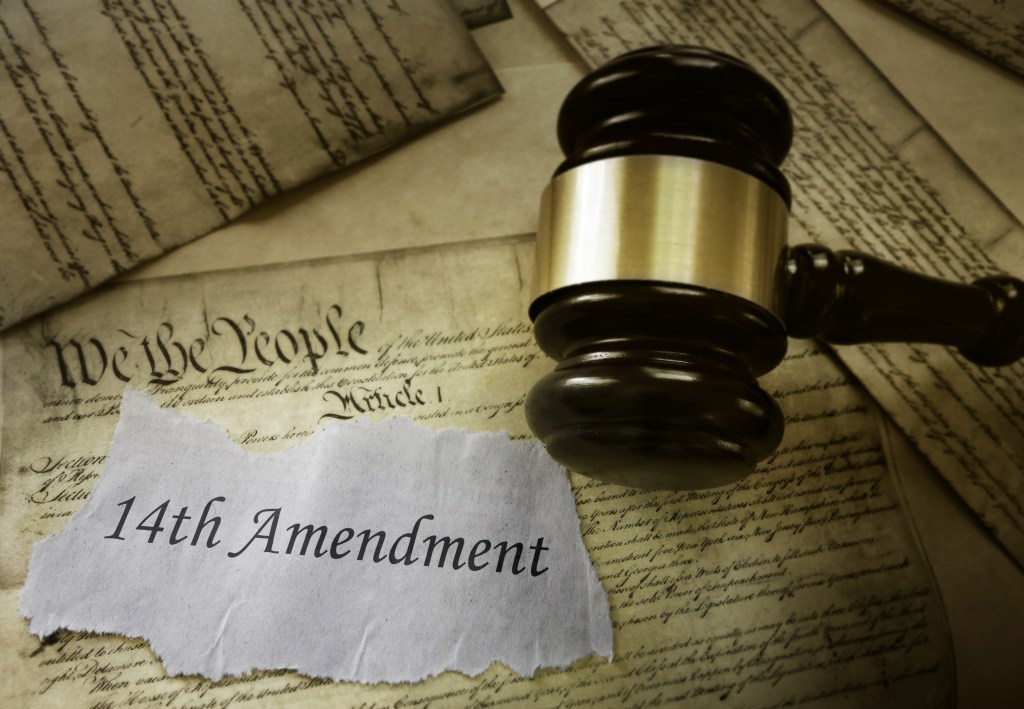
Proponents of birthright citizenship firmly assert that the 14th Amendment’s language is clear and its historical context supports the long-standing interpretation. They argue that changing this fundamental principle would violate constitutional guarantees, create a destabilizing “underclass” of U.S.-born residents without legal status, and lead to chaotic administrative challenges for states. Legal scholars and civil rights advocates emphasize that birthright citizenship is a core tenet of American liberty, facilitating assimilation and ensuring equality for all children born within the nation’s borders, regardless of their parents’ origins. They also warn that stripping citizenship from U.S.-born children would contravene the very values and foundations laid out in the Constitution.
What Lies Ahead
The Supreme Court’s recent decision, while impactful on the scope of injunctions, did not definitively rule on the constitutionality of President Trump’s executive order itself. This signals that the legal battle over birthright citizenship is far from over. Further litigation in lower courts, including potential class-action lawsuits, is expected to continue. The debate remains highly charged, intertwining constitutional interpretation with broader questions of immigration policy, national identity, and the future of American society.
~~~~~~~~~~~~~~~~~~~~~~~~~~~~~~~~~~~~~~~~~~~~~
The Scoop Digital Newspaper
thescoop@writeme.com


Leave a comment